Friday, December 18, 2015

Holiday Traditions

Check out some interesting links:

Christmas through the decades: http://www.queensofvintage.com/christmas-through-the-decades/

Christmas through the decades (tv show):  http://www.history.ca/christmas-through-the-decades/video/full-episodes/the-60s/video.html?v=584782403949#christmas-through-the-decades/video/full-episodes

Christmas in the early 1900s: http://www.cardboardchristmas.com/papateds/Christmas1920s.html

1920s Christmas: http://www.cardboardchristmas.com/papateds/Christmas1920s.html

Kwanzaa Traditions: http://www.novareinna.com/festive/kwanzaa.html

Hanukkah Traditions: http://www.hanukkahcelebrations.com/traditions.html

Connections to Winter Solstice:  http://www.timeanddate.com/calendar/december-solstice-customs.html

A guide to Festivus,  Holiday for the Rest Of Us: http://www.dailydot.com/entertainment/festivus-complete-guide-seinfeld/


You get the idea... so, what are your holiday traditions?  Not everybody celebrates Christmas, but every family has some kind of traditions that are important to them at this time of year, often revolving around food.

Use the comment feature below to mention your favourite holiday tradition, celebration, meal, or activity.

Eskimo Tags

Check out this article about "The Little-Known History of How the Canadian Government Made Inuit Wear ‘Eskimo Tags'."

http://www.vice.com/en_ca/read/the-little-known-history-of-how-the-canadian-government-made-inuit-wear-eskimo-tags

It is yet another troubling example of how Canadians treated each other in the past, not necessarily one to another, but a government to it's people.  How does this compare to other past injustices in our country?

This topic is quite relevant this week -- the final publications of the Truth and Reconciliation Commission have been released.  Here is a news link to the story; it includes a summary (and a full link) to the Report's 94 Recommendations -- it's worth having a look. 


Are there a few of the 94 recommendations that could be achieved quickly (e.g. within a year)?

Leave a comment below with your thoughts on either the "Eskimo Tags" or the Truth and Reconciliation recommendations.

Monday, October 12, 2015

Confederation Activities

Confederation (encyclopedia article) -- http://www.thecanadianencyclopedia.ca/en/article/confederation/

Drag and drop the flags of the 13 provinces and territories in the order of when they joined the Confederation (game) -- http://www.cic.gc.ca/english/games/conf/index.asp

Road to Canadian Confederation (quiz) -- http://www.funtrivia.com/playquiz/quiz18417915172f0.html

Fathers of Confederation (trivia game) -- http://www.mccord-museum.qc.ca/en/keys/games/13

Early Settlers Life in Upper Canada 1800's (activities) -- https://sites.google.com/site/smartclickeducationservices/early-settlers-life-in-upper-canada-1800s

Fathers of Confederation (info/facts) -- http://canada.pch.gc.ca/eng/1408122550222/1408364702611

---------------------------

Check out some of the above links before beginning your "Confederation News" piece.

Your task: create a headline and brief article for a newspaper on July 1st, 1867 explaining what all the fuss is about. Leave your article as a comment on this blog post. It is highly recommended that you write it our first on a word file and then pasted it in as a comment.

Tuesday, September 29, 2015

So you want to come to Canada?


You are on vacation in another country (you choose which one) and you make friends with someone who is interested in and extended stay or even moving to Canada.  They ask you to tell them what Canada is all about and what they should expect.  They want to know what makes Canada different from other countries.  What do you say? Leave a comment below with your response.

Friday, June 12, 2015

Rwandan Genocide documentary

Shake Hands With the Devil.  This documentary sticks with you -- the idea that human life could be valued so little by so many is shocking.  One hopes that the global community can learn from horrific events, but sadly we seem to repeat them too often.

Good reference on the genocide (read this if you still have questions after watching the documentary): http://www.unitedhumanrights.org/genocide/genocide_in_rwanda.htm


Having just watched the documentary based on the book, and discussed a bit of the background to the Rwandan Genocide of 1994, what do you think?

Why do you think it happened? What might have prevented it? What could prevent it from happening again somewhere else? What do you think of Dallaire?

Leave a comment with your thoughts.


Tuesday, April 14, 2015

Letters from the Front - Apr 2015

Lunch in the trenches at Fort Oglethorpe

You've heard or read some "letters from the front" in class. Now, take about 20-30 minutes to explore the following sites to get a feel for some of the details of the front lines in Europe as experienced by Canadian soldiers, then begin the assignemnt:

Canadian Letters & Images Project
http://www.canadianletters.ca/

Letters from the front
http://www.canadiangreatwarproject.com/transcripts/transcriptMain.asp

First World War Project
http://www.firstworldwar.com/photos/trenches.htm

Calgary Highlanders
http://www.calgaryhighlanders.com/photos/1914-18/10th.htm

Interactive Trench Game
http://www.warmuseum.ca/cwm/games/overtop/index_e.shtml

Canada’s War Museum on WWI
http://www.warmuseum.ca/cwm/exhibitions/guerre/home-e.aspx

Create an interview between a reporter and a soldier or a fictional letter home from a Canadian man on the front lines or woman actively involved at or near the front lines. Assume the person has served at least one of the Battles of Ypres, the Somme, Vimy Ridge, and Passchendaele, and knows about the other three or maybe other battles that Canada participated in, like the 100 Days Offensive.

Your interview or letter should aim to inform the Canadian public at home about and include details about a minimum of 5 of the following:
  • trench warfare 
  • life in the front lines 
  • the roles of technology in the war 
  • the quality of military leadership 
  • morale of Canadian soldiers 
  • the effectiveness of Canadian troops 
  • the impact of war on civilians and towns 
  • hospitals and medical treatment 
  • the roles of women in the war 
When you've done a good draft (not necessarily your final draft), post your interview or letter here under Comments. This is a detailed account, not just a quick note to tell your folks that "war is hell." Weave in some personal research on Canada & WWI from your classwork, the Canadiana Scrapbooks, and the weblinks above (or other websites). Posting comments can sometimes be tricky (Blogger can drop your comment, or the internet connection could drop), so it is highly advised that you do this on a Word Doc first and then paste it into a comment here.

Be sure to include your name & last initial (e.g. Marcy W) so I can sort out who did what. After that, look through some of your classmates' work and offer at least one comment to a classmate offering constructive feedback. Some letters will be selected for further editing and publication online.

Optional: if you have a relative or person your family knew that served in WWI, you may wish to consider them as a "test subject" for this assignment -- e.g. write the letter from his/her voice or construct an interview with this person. This may require additional research on your part.

I'm really looking forward to the results.

Thursday, March 12, 2015

Let me tell you about Canada


You are on vacation in another country (you choose) and you make friends with someone who is interested in and extended stay or even moving to Canada.  They ask you to tell them what Canada is all about and what they should expect.  They want to know what makes Canada different from other countries.  What do you say? Leave a comment below with your response.

Monday, January 26, 2015

Heritage Project feedback

What an amazing couple of weeks we've had experiencing presentations from SS10 students on their Heritage Inquiry they've been conducting off and on over the last few months.  I invite this group of students to leave a brief summary of what they did for the Heritage Connections project.  Use the comment button below to leave your feedback.

Friday, January 23, 2015

Rwandan Genocide

Shake Hands With the Devil.

Good reference on the genocide (read this if you still have questions after watching the documentary): http://www.unitedhumanrights.org/genocide/genocide_in_rwanda.htm

Having just watched the documentary based on the book, and discussed a bit of the background to the Rwandan Genocide of 1994, what do you think?

Why do you think it happened? What might have prevented it? What could prevent it from happening again somewhere else? What do you think of Dallaire?

Leave a comment with your thoughts.


Friday, October 31, 2014

Letters from the Front - The Great War

A Highlander as sentry at a gas post
http://www.firstworldwar.com/photos/trenches.htm
You've heard or read some "letters from the front" in class. Now, take about 20-30 minutes to explore the following sites to get a feel for some of the details of the front lines in Europe as experienced by Canadian soldiers:

Canadian Letters & Images Project
http://www.canadianletters.ca/

Letters from the front
http://www.canadiangreatwarproject.com/transcripts/transcriptMain.asp

First World War Project
http://www.firstworldwar.com/photos/trenches.htm

Calgary Highlanders
http://www.calgaryhighlanders.com/photos/1914-18/10th.htm

Interactive Trench Game
http://www.warmuseum.ca/cwm/games/overtop/index_e.shtml

Canada’s War Museum on WWI
http://www.warmuseum.ca/cwm/exhibitions/guerre/home-e.aspx

Create an interview between a reporter and a soldier or a fictional letter home from a Canadian man on the front lines or woman actively involved at or near the front lines. Assume the person has served at least one of the Battles of Ypres, the Somme, Vimy Ridge, and Passchendaele, and knows about the other three or maybe other battles that Canada participated in, like the 100 Days Offensive.

Your interview or letter should aim to inform the Canadian public at home about and include details about a minimum of 5 of the following:
  • trench warfare 
  • life in the front lines 
  • the roles of technology in the war 
  • the quality of military leadership 
  • morale of Canadian soldiers 
  • the effectiveness of Canadian troops 
  • the impact of war on civilians and towns 
  • hospitals and medical treatment 
  • the roles of women in the war 
When you've done a good draft (not necessarily your final draft), post your interview or letter here under Comments. This is a detailed account, not just a quick note to tell your folks that "war is hell." Weave in some personal research on Canada & WWI from your classwork, the Canadiana Scrapbooks, and the weblinks above (or other websites). Posting comments can sometimes be tricky (Blogger can drop your comment, or the internet connection could drop), so it is highly advised that you do this on a Word Doc first and then paste it into a comment here.

Be sure to include your name & last initial (e.g. Marcy W) so I can sort out who did what. After that, look through some of your classmates' work and offer at least one comment to a classmate offering constructive feedback. Some letters will be selected for further editing and publication online.

Optional: if you have a relative or person your family knew that served in WWI, you may wish to consider them as a "test subject" for this assignment -- e.g. write the letter from his/her voice or construct an interview with this person. This may require additional research on your part.

I'm really looking forward to the results.

Tuesday, October 28, 2014

The Victorian Era

Try a websearch to find out about how Canadians lived during the time of Confederation, plus a little bit before and after -- 1850-1901. This is sometimes called the Victorian Era (both in Canada and in Great Britain). Leave a comment below with what you find, perhaps something you find unusual about the way Canadians lived. To get you thinking about this time period and topic, try this game: http://www.mccord-museum.qc.ca/en/keys/games/17. You can also use your comment to say what you thought about the game (what you learned from it).

Wednesday, February 19, 2014

Explaining Canada


You are on vacation in another country (you choose) and you make friends with someone who is interested in moving to Canada.  They ask you to tell them what Canada is all about and what they should expect.  What do you say? Leave a comment below with your response.

Saturday, February 1, 2014

From the Front Lines of the Great War

Archived - Letters from the Front 2013-14

Monday, April 15, 2013

vote compass bc


BC Provincial Election coming up... just in time for your unit on politics and government.

Hey students... try this out and let me now what you think about the personal results.

http://www.cbc.ca/news/canada/bcvotes2013/votecompass

Surprised by what it said?  Do you have questions remaining about the survey or method?  Leave a comment, please.

Sunday, February 17, 2013

Letters and Interviews from the Front 2013

Archived Letters from the Front 2013

Thursday, December 13, 2012

Geography - December check in


Hello class. That's Thorin (son of Thrain, son of Thror), carrying both an axe and a sword... why not?  The sword is Orcrist, forged by elves in Gondolin long ago.  That's what's on my mind, with the Hobbit movie coming out tomorrow. What's on your mind?  Could you take a minute to check in?  Leave a comment giving a brief description of what you have planned so far for your final project in Geography.

Also, here are some links that we talked about in class but maybe you haven't had a chance to visit...

These are two videos recommended by your classmate CJ as a follow-up to our discussion yesterday on the purpose of our public education system (great discussion by the way!):
Hate school, but love education - http://www.youtube.com/watch?v=y_ZmM7zPLyI
Changing Educational Paradigms - http://www.youtube.com/watch?v=zDZFcDGpL4U

Here is the other Geography teacher's blog I mentioned... notice what her students are talking and thinking about... feel free to leave comments there, too, if you want -- she has invited you to do so.

And finally here is the tool I was telling you about in class... maybe this might be an option for presenting your final project.

Tuesday, December 4, 2012

France and North America


Hey SS9 students... as you wrap up your work on the French Revolution and the Settlement of New France -- the two parts of our unit "story" on France and North America -- here are some links to explore.

French Revolution quiz/games
http://www.schoolhistory.co.uk/games/walk/walk_frenchrevolution.html
http://www.kongregate.com/games/MitchIngram/the-french-revolution

Videos on the French Revolution
http://www.neok12.com/French-Revolution.htm

Provocative cartoon about revolutionaries in France - the Sans Culottes ("people without pants," named because they wore common-person trousers instead of the silk pants of the rich)
http://www.internationalschooltoulouse.net/y9/student_work/hannah/English/Main%20Events/TheSansCulottes.htm

New France - awesome virtual museum!
http://www.civilization.ca/virtual-museum-of-new-france/introduction/

New France - detailed history
http://www.canadiana.ca/citm/themes/pioneers/pioneers3_e.html

Build up to the war between the French and British in New France (game)
http://1759.ccbn-nbc.gc.ca/index.html

................................

Different topic, but maybe of interest...

Read one or both of these blog posts and leave a comment under the posts with your thoughts... what do you think about the kind of school this educator is describing?

http://www.shift2future.com/2010/09/stephanies-first-day-of-school-in-2020.html

http://www.shift2future.com/2011/01/tylers-loving-school-in-2016.html

Wednesday, November 21, 2012

new option for English 11 and Geography 12

Hey Grade 10 students !

Next year, Grade 11 students have a new option for completing English 11 at D.P. Todd, and completing Geography 12 at the same time.

We are launching a new program that uses blended learning to explore language, writing, literature, landscapes, and environmental education. This approach mixes classroom based learning (with a teacher), student-centered learning in small seminars (facilitated by the teacher), smaller groups (facilitated by students), and independent work (supported by all). The focus will be on the "spark" or learning passion that each student brings, creative use of technology, critical thinking, deep inquiry, project-based learning, integration of the arts, and use of digital portfolios. Examples in the course will come from diverse sources including Tolkien's Middle Earth, local writing and local landscapes, as well as work developed by the students themselves.

Students completing this program receive full credits for both English 11 and Geography 12 -- the learning outcomes from both courses will be addressed. This "Language and Landscape" program takes place in two blocks in one semester (e.g. A & B) and allows flexible attendance during one of the two blocks. All students who have completed English 10 and Social Studies 10 may apply; however, priority placement will occur for motivated students who are excited to learn in a collaborative learning environment.

Read more about this on the Language and Landscape blog.  For more information, tweet me about it @gthielmann or come talk to me in room 180.

I think students have a lot more to offer than we often give you the space to attempt. This program is designed to see what that looks like.

Wednesday, October 31, 2012

brainpops

Social Studies 9

If you'd like a different way to learn about the topic we've explored in the last couple weeks, the Industrial Revolution, try this "brainpop"


The short video provides a good review of the main ideas we've worked with, and you might enjoy the Activities, Q&A, Quiz, Experiments, FYI, and Related Topics.  Leave a comment if you'd like to share what you learned from the "brainpop" resource.

Tuesday, June 5, 2012

Human Geography links

We recently watch Hans Rosling's talk on global population growth (here on youtube or here on TED).  Here are some other links that might be of interest to you.  Feel free to leave a comment on what you learned from watching one or more of these links.

Hans Rosling 200 countries, 200 years, 4 minutes"
http://www.youtube.com/watch?v=jbkSRLYSojo

Hans Rosling debunks myths about the developing world:
http://www.youtube.com/watch?v=RUwS1uAdUcI or http://www.ted.com/talks/hans_rosling_shows_the_best_stats_you_ve_ever_seen.html

Hans Rosling and the magic washing machine:

Wednesday, May 23, 2012

dallaire and rwanda

Shake Hands With the Devil.

Having just watched the documentary based on the book, and discussed a bit of the background to the Rwandan Genocide of 1994, what do you think?

 Why do you think it happened? What might have prevented it? What could prevent it from happening again somewhere else? What do you think of Dallaire?

 Leave a comment with your thoughts.

Monday, April 30, 2012

Cold War nuclear detonation links


Lest we Forget

1. Timelapse video showing all known nuclear explosions from 1945-1998 by Isao Hashimoto
http://www.youtube.com/watch?v=LLCF7vPanrY

2. Hiroshima memorial project
http://www.openculture.com/2011/07/hiroshima_bombing_remembered_with_google_earth.html

...and the Google Earth layer that goes with it
http://hiroshima.mapping.jp/ge_en.html

3. Ground Zero simulator - pick a location and nuke it
http://www.carloslabs.com/projects/200712B/GroundZero.html

Friday, March 16, 2012

Confederation Speeches

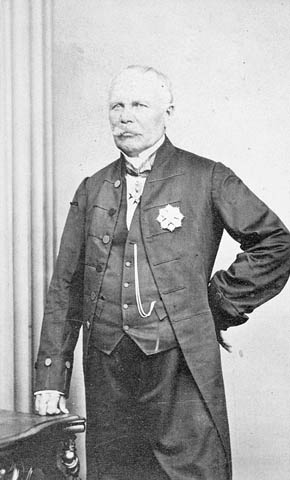
Sir Étienne-Paschal Taché
http://data2.collectionscanada.gc.ca/
In-class activity - Why Canada? - Confederation Research (3rd and 4th page of Lesson 2G handout).

25 minutes - read up on the Father of Confederation that you picked or had assigned.  Use any website for background info, but make sure you have the right guy!  Imagine how this person might have felt about the BNA colonies becoming a country.  From what you are reading, would they support or oppose Canada?

25 minutes - write a short speech (150-200 words) outlining your character's view towards Confederation. You can fill in details based on what you learned about the "Father" and the colony he represents (e.g. Canada East, PEI, Nova Scotia). This is a speech in the first person present tense ("I believe...") for or against Confederation, with arguments and evidence supporting their views.

This activity verifies a few abilities; self-assess as you go (ask yourself if you are "getting" these things):
  • conduct an efficient and relevant websearch
  • sort out useful information from fluff
  • synthesize information from multiple sources
  • use digital tools like a word processor and a blog
  • manage time in a lab environment appropriate to the task
  • express research and thinking in the form of a speech
  • write clearly using factual evidence
  • write convincingly using effective arguments
Post your speeches as a comment here. Leave you first name and initial so I can assess your work (e.g. Ashley B.)

Monday, March 12, 2012

Letters from the Front 2012

http://www.calgaryhighlanders.com/photos/1914-18/10th.htm

You've heard or read some "letters from the front" in class.  Now, explore the following sites to get a feel for some of the details of the front lines in Europe as experienced by Canadian soldiers:

Letters from the front

First World War Project

Calgary Highlanders

Interactive Trench Game

Create an interview between a reporter and a soldier or a fictional letter home from a Canadian man or woman on the front lines. Assume the person has served in at least two of the Battles of Ypres, the Somme, Vimy Ridge, or Passchendaele.

Post your interview or letter on this site: http://www.soc11eh.blogspot.com/2012/02/from-front.html under comments. This is Mr. Lewis’ SS11 class at PGSS, a chance to interact with other students. Be sure to include your name, last initial, and block so I can give you credit -- e.g. Marcy W. blk. A. If you're hesitant about doing this, you can also leave it here as a comment, or submit it as a Word file to my hand-in folder on the school server. Your interview or letter should aim to inform the Canadian public at home about and include details about a minimum of 5 of the following:

• trench warfare
• life in the front lines
• the roles of technology in the war
• the quality of military leadership
• morale of Canadian soldiers
• the effectiveness of Canadian troops
• hospitals and medical treatment
• the roles of women in the war

Sunday, March 11, 2012

Japan Tsunami a year later

source: http://www.boston.com/bigpicture/
The Big Picture has posted another amazing photo essay -- before and after pictures from the Japanese Earthquake and Tsunami on March 11th, 2011 (a year ago today!).  Click on the pics to compare then and now. Link: http://www.boston.com/bigpicture/2012/03/japan_tsunami_pictures_before.html

Saturday, March 10, 2012

SpringBreak

Great compilation, reminded me of why Youtube exists. What did you plan to do at Spring Break, or what did you do?

Wednesday, February 15, 2012

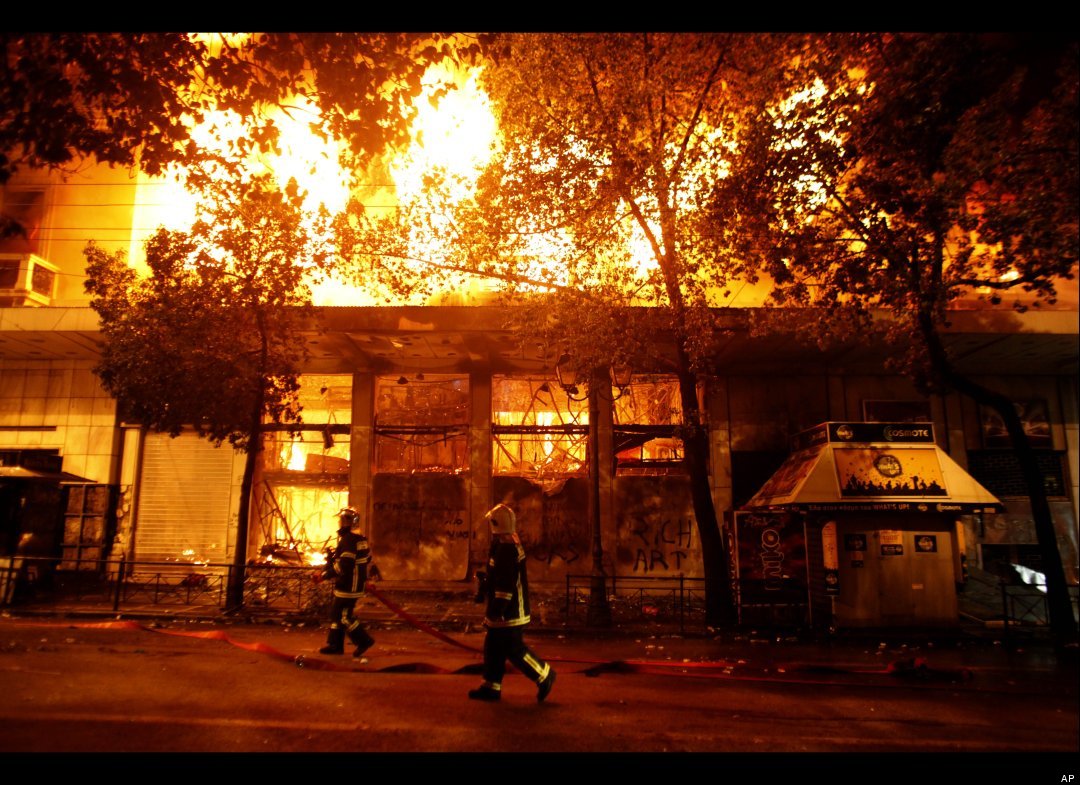
Greek Austerity Protests


Photos below show the protests in Athens, Greece this week over massive government cutbacks. These "austerity measures" were made so that the Greek government could get bailout money from the European Union to help solve their debt crisis.  The Greeks face wage cuts, layoffs, and reduction of social services.  After a few years of tough times and cutbacks, the Greeks are more willing than ever to take to the streets. Is the protest (as shown by these photos) justified?  Which tag do you think best fits these protests: active citizenship, civil disobedience, or riot?  Explain your choice... leave a comment.


Sunday, February 12, 2012

Twitter Blues


On Friday, I had an opportunity to speak to the whole grad class at our school about their use of twitter, and I thought it would be appropriate to follow up with a message for all of our students.

There has been a problem building for months among students, that many don't seem to realize that twitter is 100% public by default and that your tweets are being read not only by students but also by your families, employers, coaches, neighbours, and school staff. Much of what we see is "normal" teenage banter, often humorous, sometimes in bad taste, sometimes quite poetic, insightful, even inspiring. Twitter is an amazing medium that gives voice to frustrations, celebrations, and whatever is on your mind. Keep that up!

We also found a significant amount of disturbing content -- tweets about sex, porn, binge drinking, violence towards others, taunts, insults, and an endless stream of f-bombs from a few of our students. I think this is a problem for perhaps 20% or about 150 of our students. These tweets speak to your character and integrity, and don't speak highly of you when they are profane or offensive. For those uses of public social media, I encourage you to think about how your words reflect your values.

More troubling are the tweets from an even smaller group of our students that create a hostile environment for others at D.P. Todd, maybe 10% or about 75 students, and not defined by gender, race, age, social or economic status. While we all have freedom of speech in our society, there are also other legal rights that limit the freedom of speech. Our school district has a legal obligation to provide a harassment-free workplace for staff and a safe learning environment for students. This is threatened by tweets that are homophobic, racist, sexist, or related to drugs, vandalism, assault and slander against students or staff. For that use of public social media, we need to insist that you think about how your words affect others and relate to both the law and school policies.

Since giving the speech on Friday, I've talked with some Gr. 12 students who took the lead to show some class on twitter, and made me proud how they took ownership of their online presence and turned an unpleasant experience into an opportunity to show their strength, character, and integrity. They reminded me that this is an issue for all students, not just a few. Awesome -- I have tremendous respect for how they handled this. They also taught me about some of the contexts for how students tweet, including the importance of music and how lyrics often drift into their tweets. That's a great point that I will think more about.

Not everyone will agree with what I've been saying, or need/want to change the way you tweet, but I think most can agree that our school should be a safe place to work and learn. I appreciate the support for this from teachers since Friday. As a result of this awkward but important issue, some have had great conversations with their classes last week about social media and how it affects students and our school, and where it crosses the line. One teacher told me about how community employers have had to deal with regrettable twitter in the workplace. Another teacher shared that students, perhaps reluctantly, actually want some guidance from their teachers and that if we don't care enough to act on our beliefs, who will? Yet another colleague tweeted to me "not every positive learning experience is a feel good moment." We live and learn.

As I said to the Grade 12s, in high school you are laying the foundations for many of the most important relationships in your life. What do you want that to look like? To read like? I am proud of what you have accomplished. We share a space that I think is about intelligent questions and meaningful ideas. I want you to write the story of your life to be about the same thing -- big questions and great ideas. There's room in that narrative for funny and weird and sometimes even rude, but you have to put some craft and thought into the parts of your story that are so painfully online.

I wish you all the best as you consider how your words and actions have power. Your teachers & school staff care about you; I care about you, and we all care about the school and its culture. I think each one of you is valuable, and that you deserve to treat each other like each one is valuable. I'm not asking that you censor everything you post in social media, just asking that you put a limit on the tweets that threaten the working and learning environment at our school.

Sincerely,
Mr. Thielmann