CBC News has a political spectrum quiz -- http://votecompass.cbc.ca/en - they set it up for some elections last year but it will still give use what we're looking for. Try it and leave a comment if you like -- I'm interested to know if you are surprised by the results or not (e.g. did you end up matched up with a party you probably wouldn't vote for?). Also, why do you think people might vote for a party that doesn't match up with their beliefs? What else did you learn from doing this?
Welcome to another Blog Cabin on the Web River -- A place to explore what it means to be a Canadian citizen, to be connected to your environment, history, and culture, and what it means to be you!
Thursday, February 2, 2012
Wednesday, December 14, 2011
Canada pulls out of Kyoto Protocol
![]() |
| http://www.cbc.ca/news/politics/story/2011/12/12/pol-kent-kyoto-pullout.html |
What does this mean? Why did Canada do this? What's the Kyoto Protocol? What other agreements have come since? What will Canada do to reduce greenhouse emissions and address climate change? What has BC's response been? Look into some of these questions, or ones of your own on the topic, and leave a comment with the results of your inquiry.
You may also want to think about Justin Trudeau's response to Peter Kent's arrogance in parliament -- the govt's environment minister would not allow opposition MPs to attend Durban, and then mocks an opposition MP for not attending! Check out Justin's explanation of his choice of words. And see what others thought of the parliamentary exchange.
Saturday, December 3, 2011
Great Start!
Hello SS10 students... I'm so impressed with the first four of you bravely presenting your Heritage projects on Friday. I am honoured to hear and receive your stories and research, and can't wait for the rest of your presentations. I've written some more about this at http://thielmann.blogspot.com/2011/12/awesome-start-to-student-heritage.html
Thursday, November 24, 2011
Immigration stories
Today's lesson in class relates to the wave of Canadian immigration that came about as the result of Macdonald's National Policy and Laurier's Last Best West campaign. You are also researching many of your own family's immigration stories, and the stories of thousands of other immigration stories can be found online. Share one! Don't copy and past a huge story... leave your own story, or leave a link and brief summary of one you found.
Sunday, November 13, 2011
Heritage Project Check-in
![]() |
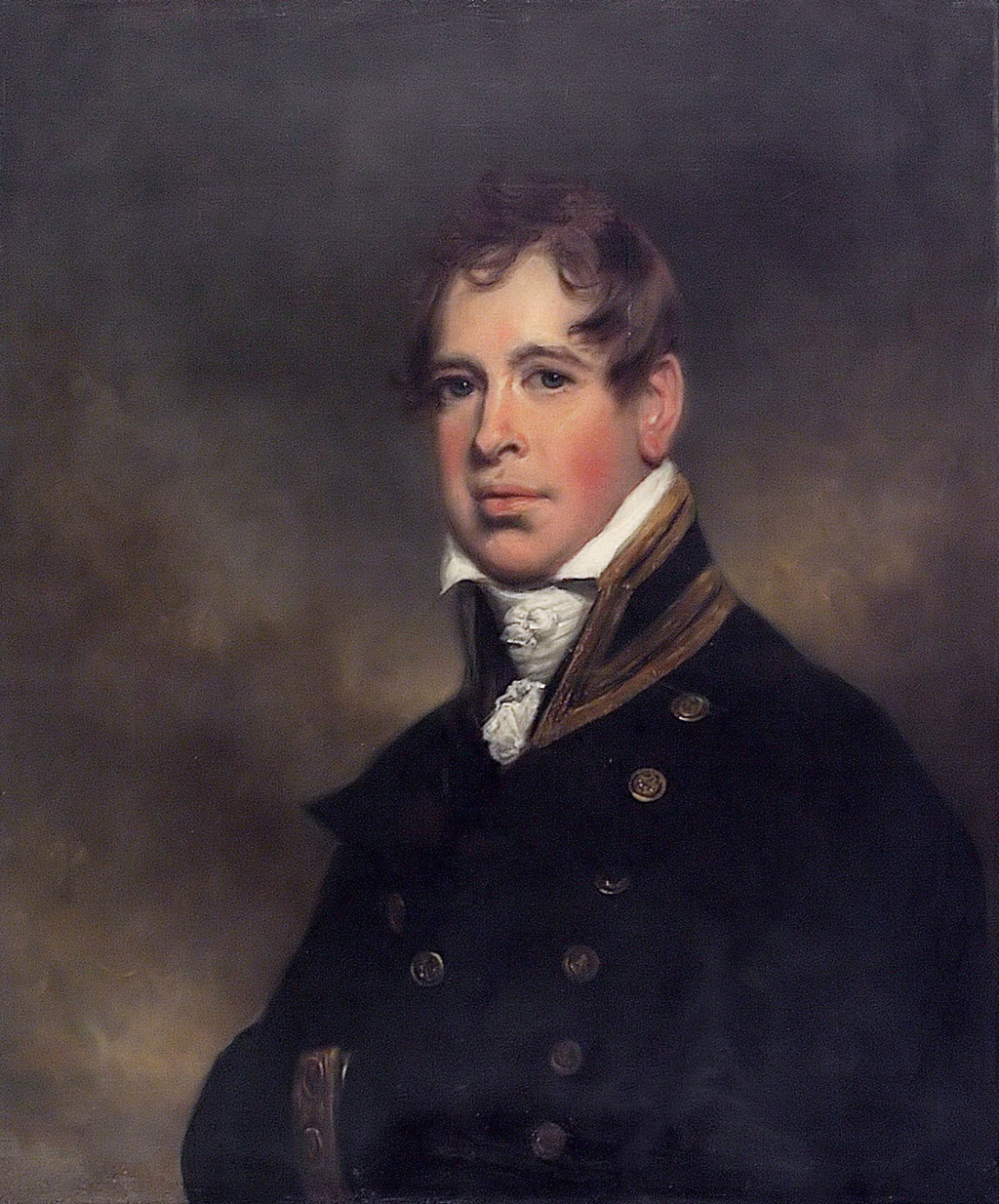
| Hailey's great-x?-grandfather, ship surgeon on Lord Nelson's HMS Victory at Trafalgar |
Friday, October 28, 2011
More please... what's on your mind?
Elections in Tunisia (after 55 years of one-party rule), earthquake in Turkey, death of a dictator, flooding in Thailand... so much going on, and almost all of it has a connection to what we are learning about in school. I'd like you to investigate the "Occupy the World" movement that started on Wall Street in New York and has spread to many cities, including Prince George. On the surface, it seems to be about people's disgust for corporate greed. Search for "occupy" and "wall street" or "vancouver" etc. CBC has a map of other cities where this protest movement has spread. Why did it start? What are the protesters' issues? What do they want? How is the "movement" different from city to city? What is the role for social media like facebook and twitter? What impact do you think the "occupy" protests will have? Does this have anything in common with the Arab Spring protests last year that brought down the Tunisian and Egyptian governments and led to a revolution in Libya? Answer 2 or 3 of these questions in a comment.
Thursday, October 27, 2011
Family History Research
Whether for a class Heritage project or for your own interest, you may want to investigate some of these "genealogy" sites:
Rootsweb engine http://wc.rootsweb.ancestry.com/cgi-bin/igm.cgisearch existing family trees
Rootsweb http://www.rootsweb.ancestry.com/ research tools, free portion of ancestry.com
Canadian Letters and Images http://www.canadianletters.ca/ online archive of the Canadian war experience
Family Search https://www.familysearch.org/ free family history and genealogy records
Canada GenWeb http://www.canadagenweb.org/ check out the provincial pages, too
please let me know in a comment if you find other useful sites, I'll add them
Rootsweb engine http://wc.rootsweb.ancestry.com/cgi-bin/igm.cgi
Family Search https://www.familysearch.org/
Thursday, October 20, 2011
What's on your mind?
Pic: Gadhafi captured and killed.
SS10 students... some of you have been looking into current events and have found some interesting stories. Maybe you have other questions about Canada or society. Leave your thoughts as a comment, if you wish. If you have a news item, please leave a link, too.
Wednesday, October 5, 2011
Geography 12 Tectonics & Waffles
What a great way to wrap up our unit on earth structure, geology, plate tectonics, faults/folds, earthquakes, and volcanoes. Nick and Nick served up waffles for the class, using each one to demonstrate some kind of plate boundary or fault type before their classmates devoured them. After all of the lessons, slideshows, reading, videos, quizzes, and demos in out unit, we've had some fantastic presentations that fulfilled three criteria: deepen our understanding of selected learning outcomes from the unit, reflect the interest & talents of the student as applied to meaningful inquiry, and embody learning in some way -- voice, performance, demonstration, physical construction, etc. Today was a small feast celebrating learning with great waffles! Thanks, class -- engaging presentations so far, and 2 more to come...
Friday, July 8, 2011
SS11 class on CKPG

Some of you (SS11s) had a chance to talk to the TV camera towards the end of June... here's your piece on CKPG! http://ckpg.com/news/14925-canada-day-spirits-video.html. Great work!
Monday, June 6, 2011
Resource Ethics
Yo Geo 12... identify a real-world case study that shows one of the resource ethics at work that we looked at in class... leave your response with the ethic under study, a very brief description of the case study (that shows how it demonstrates the resource ethic), and a link that gives a decent overview of the case study (e.g. news article)
Thursday, June 2, 2011
WASTE
You've watched some online content about waste, consumerism, and sustainability... What did you watch (title/url)? What did you think of what you watched? What did you learn?
pic from dump community in Managua
Thursday, May 26, 2011
Shake Hands With the Devil
Having just watched the documentary based on the book, and discussed a bit of the background to the Rwandan Genocide of 1994, what do you think? Why do you think it happened? What might have prevented it? What could prevent it from happening again somewhere else? What do you think of Dallaire? Leave a comment with your thoughts.
Monday, April 11, 2011
Open Letter to my SS11 students
The Fading Echo...
Do you realize that you are the last of a generation? Fifty years from now you will be telling youngsters about life in the olden days, and they’ll be amazed that you were born in the 1900s. Some people call you the Echo or Boomerang Generation, the children of the postwar Baby Boom that changed the face of Canada, and for some of you the “Generation X” that followed. Others call you the Millennium Generation or Generation Y, the ones born at the twilight of the 20th Century. Take a look at the graph to see where you fit. Canadian Demographics - births per year 1921-2006 (source http://www.statcan.gc.ca:

Most of your parents and some of your grandparents were “Boomers” -- the big spike from 1946-1964. You are near the last part of the “echo” from about 1980-1999. So what? What’s interesting about the graph, about Canadian society, is that the generation before the war was not so big to begin with and is getting smaller all the time. These are your grandparents, your great-grandparents, and other people now in their 70s and older, people who lived through the Great Depression and World War Two. Almost all of the WWI vets have now passed (two are still alive as I write this, both 110 years old and living in the U.K.). Canada’s last WWI vet died in 2010. We have about 140,000 WWII vets still alive (less than half of 1% of our population). The youngest of these vets are about 83 yrs old. We have just a few years before there are just a handful of vets still with us. Of course, many other “pre-boomers” are with us, but they, too, will be less visible in the coming years. It is important that their stories are told, and that their unique perspectives on Canadian history in middle of the 1900s is preserved.
So, you are the last generation that will be born that can reach back past the “50 Year Gap” and ask questions of men and women who remember the Great Depression, World War Two, and the beginning of the Cold War. For many this was a rural life -- few had televisions, electricity, or automobiles -- Canada is now about 80% urbanized, but less than 50% in the 1930s, so chances are pretty good your great-grandparents grew up on a farm or in a small town. For many this was a time of restraint, conserving resources and fixing rather than replacing items that were broken. Those from beyond the 50 Year Gap know all about preserves and homemade bread, polishing shoes, and plucking birds. They’ll have stories of the war, of travel on ships, of hard work and strange accidents. They’ll have an opinion on Diefenbaker vs Pearson, on the building of the Berlin Wall but also its tearing down. Most importantly, their stories are personal and biased and expert and unusual all at once. When seen as a whole, their story is that of Canada itself, the foundations of modern society inherited by the Baby Boomers and those who followed, including you.
Do you realize that you are the last of a generation? Fifty years from now you will be telling youngsters about life in the olden days, and they’ll be amazed that you were born in the 1900s. Some people call you the Echo or Boomerang Generation, the children of the postwar Baby Boom that changed the face of Canada, and for some of you the “Generation X” that followed. Others call you the Millennium Generation or Generation Y, the ones born at the twilight of the 20th Century. Take a look at the graph to see where you fit. Canadian Demographics - births per year 1921-2006 (source http://www.statcan.gc.ca:

Most of your parents and some of your grandparents were “Boomers” -- the big spike from 1946-1964. You are near the last part of the “echo” from about 1980-1999. So what? What’s interesting about the graph, about Canadian society, is that the generation before the war was not so big to begin with and is getting smaller all the time. These are your grandparents, your great-grandparents, and other people now in their 70s and older, people who lived through the Great Depression and World War Two. Almost all of the WWI vets have now passed (two are still alive as I write this, both 110 years old and living in the U.K.). Canada’s last WWI vet died in 2010. We have about 140,000 WWII vets still alive (less than half of 1% of our population). The youngest of these vets are about 83 yrs old. We have just a few years before there are just a handful of vets still with us. Of course, many other “pre-boomers” are with us, but they, too, will be less visible in the coming years. It is important that their stories are told, and that their unique perspectives on Canadian history in middle of the 1900s is preserved.
So, you are the last generation that will be born that can reach back past the “50 Year Gap” and ask questions of men and women who remember the Great Depression, World War Two, and the beginning of the Cold War. For many this was a rural life -- few had televisions, electricity, or automobiles -- Canada is now about 80% urbanized, but less than 50% in the 1930s, so chances are pretty good your great-grandparents grew up on a farm or in a small town. For many this was a time of restraint, conserving resources and fixing rather than replacing items that were broken. Those from beyond the 50 Year Gap know all about preserves and homemade bread, polishing shoes, and plucking birds. They’ll have stories of the war, of travel on ships, of hard work and strange accidents. They’ll have an opinion on Diefenbaker vs Pearson, on the building of the Berlin Wall but also its tearing down. Most importantly, their stories are personal and biased and expert and unusual all at once. When seen as a whole, their story is that of Canada itself, the foundations of modern society inherited by the Baby Boomers and those who followed, including you.
Monday, March 28, 2011
ELECTION ON! Try Vote Compass

Many Social Studies students will remember trying politicalcompass.org to find out where they were on the "political spectrum" -- but were often left with questions about what it meant and how it related to Canadian politics. As you may know, Canadian voters are heading to an election on May 2. CBC News has made their own spectrum quiz -- http://www.cbc.ca/news/politics/canadavotes2011/votecompass/. Try it and leave a comment if you like -- I'm interested to know if you are surprised by the results or not (e.g. did you end up matched up with a party you probably wouldn't vote for?). Also, why do you think people might vote for a party that doesn't match up with their beliefs?
Sunday, March 13, 2011
Japan Earthquake and Tsunami
Source: The Big Picture, an amazing series of photo essays on world culture, politics, and environmentNews sites to follow the disaster:
BBC overview http://www.bbc.co.uk/news/world/asia_pacific/ or recent story here on BBC
CBC overview http://www.cbc.ca/news/world/story/2011/03/11/f-japan-earthquake-topix.html or recent story here on CBC
What's you reaction to this natural disaster, or what questions do you have?
Wednesday, March 9, 2011
Unrest in Middle East and North Africa

Source: The Big Picture, an amazing series of photo essays on world culture, politics, and environment (like, Social Studies!)
Also, check out the interactive map on the unrest in the region from CBC (Canadian Broadcasting Corporation.
Tuesday, February 8, 2011
The Political Spectrum
There are lots of places on the internet to learn about the political spectrum, political philosophies, political parties, and news items related to politics and elections. Put some of these words (political, spectrum, etc.) into a web search and see what turns up. What great sites did you find or would you use? Leave a comment.
Although some of the questions are hard to answer, the quiz at www.politicalcompass.org/ will help you determine where you might be placed on the political spectrum. I think the results tend to skew a bit towards the left.
Here's a political spectrum chart that you can use to locate political parties, ideas, debates, and historic events. You can compare it with one that has been filled out, probably by an American college student taking political science.
Although some of the questions are hard to answer, the quiz at www.politicalcompass.org/ will help you determine where you might be placed on the political spectrum. I think the results tend to skew a bit towards the left.
Here's a political spectrum chart that you can use to locate political parties, ideas, debates, and historic events. You can compare it with one that has been filled out, probably by an American college student taking political science.
Thursday, January 6, 2011
Thursday, November 4, 2010
Glaciation Webquest
WORD DOCUMENT version of the Webquest
1. http://www.physicalgeography.net/
....... Glacial Processes
....... Glacial Landforms
....... Periglacial Processes and Landforms
2. http://en.wikipedia.org/wiki/Glacier
3. http://www.uwsp.edu/geo/faculty/ritter/geog101/...
4. http://gsc.nrcan.gc.ca/landscapes/physio_e.php
5. http://www.mun.ca/biology/delta/...
6. http://www.uwsp.edu/gEo/faculty/lemke/alpine_glacial_glossary/glossary.html
7. http://geoscape.nrcan.gc.ca/calgary/topics/glacier_e.php
Feel free to comment... what did you learn from this webquest?
1. http://www.physicalgeography.net/
....... Glacial Processes
....... Glacial Landforms
....... Periglacial Processes and Landforms
2. http://en.wikipedia.org/wiki/Glacier
3. http://www.uwsp.edu/geo/faculty/ritter/geog101/...
4. http://gsc.nrcan.gc.ca/landscapes/physio_e.php
5. http://www.mun.ca/biology/delta/...
6. http://www.uwsp.edu/gEo/faculty/lemke/alpine_glacial_glossary/glossary.html
7. http://geoscape.nrcan.gc.ca/calgary/topics/glacier_e.php
Feel free to comment... what did you learn from this webquest?
Tuesday, October 5, 2010
Climate Change games

Climate Challenge: North Cascades National Park
http://www.northcascadeseft.org/
Try some of the games related to conserving resources and planning for the impacts of climate change. Feel free to comment here on what you thought about this site.
Monday, September 20, 2010
Reading Contour Maps
Contour Lines - http://rst.gsfc.nasa.gov/Sect11/Sect11_2.html
Various Map symbols - http://geology.isu.edu/geostac/Field_Exercise/topomaps/images/USGS_Topomap_Symbols.pdf
How To Read a Map on Howcast
Various Map symbols - http://geology.isu.edu/geostac/Field_Exercise/topomaps/images/USGS_Topomap_Symbols.pdf
How To Read a Map on Howcast
Thursday, September 9, 2010
Geographers-in-training

Hey... let's see if anyone arrives here. Geography 12 students (or wanyone else for that matter), what do you think of the Gaia Hypothesis... is our physical planet connected in some way, self-regulating and managing its own systems for the purpose of survival? While you're at it, what do you think are the biggest environmental issues facing us here in Prince George, or in Canada, or you can tak on the whole world if you like.
???
Thursday, May 13, 2010
Rootsweb website
a bit of genealogy...
Try putting just the surname and a birth or death year of one of your oldest ancestors into the search fields at the ROOTSWEB website http://wc.rootsweb.ancestry.com/cgi-bin/igm.cg
keep trying a few options, just first and last name, etc. and see if you can find a matching result
Try putting just the surname and a birth or death year of one of your oldest ancestors into the search fields at the ROOTSWEB website http://wc.rootsweb.ancestry.com/cgi-bin/igm.cg
keep trying a few options, just first and last name, etc. and see if you can find a matching result
Saturday, April 10, 2010
VIMY
Vimy ceremonies salute last WW I vet
http://www.cbc.ca/canada/ottawa/story/2010/04/09/ottawa-vimy-ridge-babcock-world-war.html
Thursday, January 21, 2010
Making Connections
Earthquake damage in Port-au-Prince, Haiti January 2010

We've looked at culture, environment, politics, and economy in our SS10 course... the history and geography of Canada, but these things are also unfolding around us in the world, from the Haitian earthquake to the Copenhagen Summit to the Olympics. What is a topic, project, idea, or story you'd like to think about as our course winds down?

We've looked at culture, environment, politics, and economy in our SS10 course... the history and geography of Canada, but these things are also unfolding around us in the world, from the Haitian earthquake to the Copenhagen Summit to the Olympics. What is a topic, project, idea, or story you'd like to think about as our course winds down?
Wednesday, December 2, 2009
Copenhagen

Follow what's going on at the 2009 Copenhagen Climate Change Conference. Find other news sources on this, too, and please think about it and bring it up in class.
Wednesday, November 18, 2009
thinking about heritage
SS10 students are embarking on their heritage projects... many of the current SS11 students have done this, maybe they have advice to offer (ask one!!). Think about the end product, a presentation to class that gives us a glimpse at the important things that "inform" your past. Namely: 1. a graphic representation (like a family tree, a picture-poster, a slideshow)
2. an interview with an elder (family or not) about their experiences in the past
3. share a story, life-lesson, heirloom, ethnic food, heritage skill, artistic performance, or symbolic object
Please be willing to pace it slow so we can ask questions and enjoy your inquiry." Looking for a starter on family research? Google genealogy, family tree, etc., or take a short cut to Rootsweb and plug in your oldest known relative as a starter. If you can't turn anything up after a few searches, move on, and start researching cultural background.
You could also try searching for specific places, histories, flags, maps, icons, images, landscapes, ideas, documents, foods, arts, etc. tied to the culture/s you are researching. Leave a comment here if you find a site worth sharing with the others that could help with the Heritage project.
...
Friday, November 13, 2009
GEOG 12 PROMPT

Let's face it, you're learning stuff!!! As we erode, transport, and deposit our way through the unit on FORCES, pick a topic from the list that you wish to study in more detail...
Mass Wastage, Rivers, Groundwater & Karst, Glaciation, Deserts, and Coastal Landscapes
Design a project around your choice: a focus on an aspect (e.g. caves & caving, floodplains & flood control), understand a process (e.g. wind erosion, wave action), or study an area (e.g. river landforms in northern BC).
Whatever you do, put your "self" into it -- perform, re-enact, talk, build, mashup, create, display, bake, sing, decorate, demonstrate, find a way to "embody" what you know.
Assessment: rigorous/well-researched content, creative/embodied presentation
Due: have your work done for Friday Nov. 27. We'll present that day (or earlier if you are ready) and on Monday Nov 30.
Leave a comment: what do you think you'll do?
Subscribe to:
Posts (Atom)